Saturday, October 13, 2012

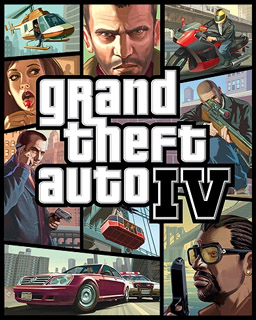
100 Reviews for 100 Games #4: GTA IV


                Grand Theft Auto IV starts what seems to be a maturing in the franchise and as a result has experienced some growing pains that are present in the design. The game removes the previous character stat building mechanic from the previous installment and instead focuses on the core gameplay of completing story based missions in a sandbox environment. The notable thing here is that the sandbox environment has been filled with many subtle design choices that add some texture to the gameplay even though they don’t really contribute to the core interaction loop.

                Story is a big part of the gameplay as it contextualizes the sandbox world as well as acts as the key that opens up new areas in the environment. Without delving too much into the story it attempts a much more serious tone than its previous installments and adds some choice in which the player can affect the story, however, the impact of these choices is minimal to the overarching story there’s really only one important choice that affects the outcome of the story. While these choices feel somewhat irrelevant in the grand scheme of things the game at least tries to make the method of inputting your choice somewhat interesting. The game doesn’t fall back on having the player simply pick from choice of outcomes in a choice bubble fashion, but instead lets the player act out their choice using gameplay during key moments of the story. Some examples involve choosing whether or not to kill a certain character, deciding whether or not to take an item, or deciding which character to betray. This method feels a little more personal and the game could’ve used this more often to better emphasize the indecisive nature of the main character as well as play off the fact that character constantly complains about being used like a puppet. Another interesting narrative mechanic would’ve been to allow the unpredicted nature of this method of choice push the story in a more modular direction. However much of these choices are very black and white and in the end don’t amount to much.

                When the playing the game like an actual sandbox things get much more interesting. The world of Grand Theft Auto is very interesting and the designers have made sure that world feels vibrant and alive with interesting A.I. and an abundance of visual and audio content such as television channels and radio channels that help build and contextualize Liberty City. Many of the things you can do in this game just help establish immersion whether it’s playing simple mini games, watching scripted NPCs perform comedy and magic, walking around drunk, or even just eating a hotdog. The only problem the physics can get in the way of the game sometimes, whether the cars control like they’re on ice, or the motorcycles which are just a pain to operate. Sometimes the game tries too hard to be realistic and adds some bizarre elements that just make the player feel fragile such as taking damage, and even being able to become incapacitated, from falling. And, other times the player may end up flying out of a vehicle from a head on collision and bounce around walls only to have the character stand up and brush it off which makes the game feel like slapstick comedy

                The multiplayer is enjoyable when combining standard multiplayer game archetypes and the creative freedom of the sandbox environment. The best part about multiplayer is when the game becomes hectic as players start stacking cars to form barricades, or when they use the urban environment to their advantage to flank opposing players. The game stands stronger when the game encourages players to think of creative solutions using all the different components in Liberty City.

Thursday, October 11, 2012

100 Reviews for 100 Games #3 Super Mario Galaxy


               Super Mario Galaxy is the culmination of years of tweaking the platform precision mechanics of the Mario franchise and an attempt to address the criticisms of the previous core series installment Super Mario Galaxy. All of the features in this game have been whittled down to the core in an attempt to go back to the series roots when it first hit the 3rd back in Super Mario 64. The game forgoes any complex narrative that could take away from its pure gameplay structure and makes sure that the gameplay is the strongest thing about Mario Galaxy.

                The most important thing in any Mario game is being able to control the main character with a level of confidence that feels second nature in order to steadily introduce new concepts and obstacles to traverse. The game manages to replicate a feeling of satisfaction by just having the character run and jump around, probably the best thing about this and the perhaps the Mario franchise in general is how versatile the character is. The game’s biggest feature, intergalactic platforming, is handled exceptionally well thanks to the controls as well as the dynamic camera. Running around on a spherical object and jumping from one space to another feels incredibly intuitive. After a while it becomes second nature and you begin to forget how much thinking you actually do in this game in regards gravitational pull and Mario’s new sense of momentum which are new concepts in a Mario game. The camera also helps by orienting itself relative to Mario in a way that doesn’t confuse or nauseate the player. It would’ve been nice if the game had gone deeper exploiting intergalactic planet to planet platforming. Instead there are some levels that are more traditionally laid out like one huge plot of land with pitfalls that lead to black holes.

                The game also does a really good job at packing a lot of gameplay and conserving actual content. The game stays true to the classic 3D Mario formula with its hubworld and mission based stages. The missions are designed in a way in that, even if you are revisiting the same level 7 times it never drags or feels repetitive thanks rearranged level elements and missions that force you to think about the same level in a different way. The game also never forces you to play the levels fully, instead allowing a steady progression in difficulty with the introduction of new levels after a certain threshold has been met and slowly gravitating towards a more open level selection as you progress through the game. The only real drag on this game is the boss battles with Bowser. While other stages and bosses try to be creative, the fights with Bowser just come off as repetitive. Whether it’s trying to keep up a tradition that harkens back to the original Super Mario Bros, or maybe just not being able to make creative fights with Bowser, these fights are the glum in an otherwise bright game.

                The extras in this game are another enjoyable part of the experience such as Prankster Comets which add a level of challenge for the more veteran Mario players as well as the inclusion of Luigi as a playable character after beating the game adding a subtle increase in difficulty. Luigi’s difference in momentum and friction makes the controls feel fundamentally different in a way that changes how you play the game. The only real downer is the multiplayer which admittedly feels a little tacked, as what could’ve been a fun co-op experience with a friend with each controlling one of the Mario Brothers, only amounts to the second player moving a cursor around the screen helping the first player get items and stun enemies. However Super Mario Galaxy still does a lot of things right which makes this one of the most enjoyable experiences in a long time.

Monday, October 1, 2012

100 Reviews for 100 Games: #2 Soul Calibur


Soul Calibur is a very easy fighting game to pick up and enjoy through its simple controls and easy to grasp mechanics. Upon turning on the game the player is immediately introduced to the roster of main characters. Each character has a distinctive feel and play style inviting all kinds of play styles and entices players to learn new characters as they provide very different play experiences adding a welcome element of discovery to the fighting game genre.

The combat feels very heavy and powerful as each attack has immense aesthetic feedback, characters swing their weapons and bodies with all their might creating a very satisfying feeling of power and fidelity. The gameplay is very to pick as it allows players with very little knowledge of the game to start creating a flurry of combos and devasting attacks that chomp away chunks of their opponents lives as green pieces from the the health bar fly off the screen. As you may pick up on this game is very big on feedback that directly leads to player empowerment. Some characters yell and lunge their weapons forward while heavy characters stomp around the arena and heavy attacks make characters writhe in pain and fall to the ground. All of this is more than just audio and visual eye candy as these cues are all part of the secondary feedback that telegraph to the player the state of the game with great effect.

The game is balanced in a peculiar way as in rather than giving each character an balanced and equal feel, instead each character feels overpowered in one aspect creating a sense of controlled chaos. Whether its Voldo's slippery control style with unorthodox stances to Astaroth's giant weapon that seems to clear the screen with every swipe. This all correlates a common theme which is empowerment, the genius is that at the end of the day every character feels satisfying to control, gives the player a feeling that they have the upper hand, and is still statistically balanced. While each character may seem to fight very differently all of their attacks and moves still adhere to a set of guidelines and attack rules. There are only 3 main attack types, horizontal, vertical, and kicks as well as a slew of technical moves which include jumping, grabbing, and guarding. Guarding is activated via a button press instead of moving away from the player and hops and crouching allow for more advanced dodging maneuvers along with impact guard which allows for offensive blocking. Since the fighters can move in all 3 dimensions the game takes advantage of this by having attacks and grabs change depending which direction characters are attacked from.

Since this is a console port of a fighting game, the designers felt the need to pad out the fighting experience with extra modes, which really just amount to drawn out explanations for characters to pummel each other with various conditions. With the mission mode allowing players to build up techniques by having to perform various conditions besides just defeating your opponent as quickly and violently as possible. The core experience never gets muddled, however, the game is first and foremost about fighting and delivers its unique experience allowing players to enjoy it in its purest form with a combat system that is incredibly satisfying and easy to play.

Tuesday, September 18, 2012

100 Reviews for 100 Games: #1 Legend of Zelda Ocarina of Time


Today I'd like to start something new to get back into the rhythm of posting, so this post if the first of many mini game reviews I'll be writing as part of David Perry's Game Design challenge which involves reviewing 100 of the greatest games of all time from a designers perspective. Hopefully this will fill the void left from the purge and since I spend most of my time programming for the time being it'd be nice to look for an excuse to write even more. Some of these reviews may be stinkers or a little redundant, but if any of these particularly stand out I'd like to do actual video analysis in the future.

Friday, May 25, 2012

What Is This Place?

Well hello everyone... anyone? It's been a while. I've walked the walk and talked some talks and I have about 69 words left to type before my internet connection gets cut again. I just finished my graduation ceremony and am now looking for a job. This Summer will be my last semester at college and it's more or less just me tying up a few loose ends rather than a full blown course load.

Also check my games website I've got a new project demo up and it's getting multiplayer!

Tuesday, April 3, 2012

What's Going On Here?

Oh boy, forgive me if I'm a bit hesitant about making posts in April since everyone likes to string pranks well past the first day of the month. Gotta say though, my favorite one (or two) was the 8 Bit Google Maps, Google Maps Quest. Such a shame that a such a fun idea was wasted on a joke, albeit a rather good one. The notion of being able to play a Dragon Quest-esque game on Google Maps would've been admittedly awesome. Getting directions wouldn't just be a mere get from point a to point b but an actual quest where you must traverse an 8-bit Earth littered invaded by monsters that harken back to the old NES games from back in the day. Acquiring party members by crossing paths with other people who have created destinations that intersect or match with yours creating. What a fun little diversion that would've been.
Another April Fools event that was just fantastic was the Adult Swim Toonami takeover. I didn't expect them to go all out by getting Steve Blum to do all new Tom segments and show the ending of classic shows that aired on Toonami. They even did a Mass Effect 3 review, it was the complete package and was a total treat. Now I can just see all those people who were originally dormant about the death of Toonami rising up now more adamant than ever demanding the return of Tom. Still, that was pretty cool.

Tuesday, March 27, 2012

Designing for the Blind?

So do blind people play games?

This was interesting question that I was asked, not sure if they were seriously asking me to contemplate the question. Although that is interesting, visuals have probably become one of the most important forms of feedback in video games, and that brings to question how would you be tasked for making a game without visuals?

So I stumbled across this video,


Now first off that's awesome, and just goes to show the power of the gaming community at its best. However having to painstakingly record every single movement through memorization seems like a daunting task (2 years it took them to record every single step necessary to beat the game, that's incredible). Now how do you design a game for the blind?

What does it mean to be blind?

It's impossible for me to answer that. People who are blind have heightened senses in other areas, some have developed interesting methods to get around their environment. Terry Garret is an extraordinary individual who aside from being an engineer likes to sit down and enjoy video games. He has created a system that has allowed him to play video games based on sound cues and haptic feedback from controller vibrations.


Haptic feedback from standard controllers are still rather limited, the motor is usually limited to varying degrees of rumble strength and pulse patterns. You'll know when you get hit, or hitting something. In other words its a 1-dimensional form of feedback to the player. Some games like Ocarina of Time try to use it for the element of Discovery such as when you acquire the Stone of Agony and use it like a metal detector to look for secrets in the game. However it still requires you to rely on trial and error, because it only determines your range within a point with no particular sense of direction in mind.

Sound seems to be a more viable option, especially now that we have the technology to create 3D sounds in games. This concept can be seen in something like the Devil's Tuning Fork, however, ironically the game relies on visuals rather than spatial sound design to traverse the game world. Fret not for there does exist a game called, In the Pit where the direction of sound comes into play. Long story short, you're the monster of an evil king that lives in a pitch dark pit that has to eat the people who get thrown into the pit.

Here's a screenshot from one of the levels in the game, In The Pit.
So we have spacial awareness based on sound design but what about everything else? In The Pit does has the right idea with rumble by using it as a complement to the sound design in that it acts as the wall, or obstruction. It's sends a message to the player that it requires an action to be performed. It goes from 1-dimension to, it's either on or off, if it's on then you're already there.

Sound and Rumble as Game Mechanics

Spacial awareness is perhaps too concrete of a concept to grasp in terms of dealing with sound in game design. Something that I'd like to see is something more abstract, or rather that sound is not only the feedback of the physical space in a game, but also feedback for the user interface or HUD.

Sound is incredibly important to determine out health as human beings. Doctors listen for heart murmurs, erratic breathing, and many other kinds of strange sounds that our body might make to indicate any health issues that we might have, but there also exists healthy body sounds. It's a shame that the only time we ever hear a heartbeat in a video game is when we're in a state of danger or close to dying. I'm not saying it shouldn't be done, in fact the sound of a heart is instantly recognizable and would act a great mechanic to check on a player's status by having the ability to listen into their heart rate.

Originally I said that haptic feedback on a controller may not be as effect as detecting 2D or 3D space. But in an abstract concept something like sound and rumble could be used as a way to determine an action with the added benefit of creating the element Tension in the player. As an example let's say you're charging an action that will be executed upon the release of a button. How can we gauge the potency of an action without using an onscreen element? The rumble motor has the ability to modulate the strength of its vibrations. A vibration that scales up could be a way to indicate the strength, or the value relative to something. This is just an example where sound plays a more important role in, well, playing the actual game.

Another one is the element of timing like a ticking clock or a metronome. Using these sounds we create rhythm. Rhythm Heaven already achieves this in a rather elegant way, by creating gameplay that's incredibly simple (one or two methods of input at most) but addictive and modular as well. Newer iterations of the Rhythm Heaven franchise are starting to rely more on audio cues rather than visual ones. I foresee this being one of the shining examples of game design using sound as the mechanics in the future as it starts to evolve and get more creative.


Sound as Atmosphere

Lastly I'd like to point out when sound use as a method of enhancing the atmosphere of the game. Sound doesn't take on the role of actually defining the experience (the design and mechanics should probably be doing that in a video game), however it can definitely be a powerful tool to define the fiction of the world you're immersing yourself in. I think we can all agree that Silent Hill is one of those games that defines what it means to have your sound create the atmosphere. To me the best tracks are the ones that sound less like music and more like background noise (I mean that in the best way possible). These sounds create a psychological effect that drenches the player in atmospheric charm and really helps lock in the emotions the game creators wanted to the players to feel when playing their game.


Then there are games that, going back to the beginning of this post, are used as a sense of feedback although not really in the navigational sense. I'm talking about games that have sound for every action you make in the game as form of feedback in the same way you'd would receive feedback from popping bubble wrap. In some way the sound acts as a reward, like in Lumines.


Now, do these kinds of elements do anything to benefit blind players? Maybe, they sound great but do they add anything to the core fundamentals of playing through a video game? The answer is the same for a player who can see just fine. The benefits for having sound as the atmospheric element is that it paints a canvas of the world and how the player perceives it. Someone who can't see what their character looks like may actually have the ability do what some players with sight may never do. The ability to perceive themselves and the world around them in ways we can't even imagine. 

I'd like to leave you with one final video before I bid you, adieu.

Monday, March 12, 2012

Tuesday, February 28, 2012

GDC Next Week!

GDC is happening next week, so to anybody else who's going I will see you there! I will be attending all week so any sort of projects I'm currently on will unfortunately slow down. My schedule next week is packed as I have filled up my schedule making sure I get money's worth. I will probably end up setting up a mini work studio in the hallways whenever I have some down time, but don't expect too much new content this week, (especially from THAT game).

Thursday, February 16, 2012

Dissecting the First Screen: Legend of Zelda (NES)


Today I'm starting a game analysis feature called Dissecting the First Screen  taking a look at the first "screen" of gameplay and everything else that leads up to that first screen. For now I'm going to start with mostly older games as they are figuratively and quite literally easier to describe in terms of the first screen of gameplay. We'll start with Zelda on the NES since the term "First Screen of gameplay" is quite literal when it comes to this game. We'll talk about the very first screens up until you get the sword which represents the "crossing the threshold" in most Zelda games.

The very first Zelda game for NES says a lot about Console Game Design in the 80s. Many games nowadays try to establish an elaborate narrative as soon as you start playing the game. Back then the bulk of the plot, descriptions, and flavor text was confined to the booklet since the limitations of the NES didn't allow for long cutscenes of exposition. All you get is a short overview at the title screen and a list of all the items. However after the naming screen you're thrown into the world without any explanation during this time. That means if you didn't have the book or didn't watch the little scenes during the title then you have no idea what's going on.
Sometimes it became difficult to tell whether the game contained grammatical errors or were just trying to cram as much information as possible in a small space.

 Now getting back to the whole, "when I get the sword" spiel. We'll count the time it takes to get your sword from the first moment that you control Link to the moment you get it in your inventory.

Alright the first thing that happens if you're dropped into the overworld. There are no inherent threats in this screen. This is important because the player needs to know how get comfortable with the controls and being a kid in the 80s the best way to do that was to just press all the buttons. You have 4 possible destinations, lets say I don't go into the cave first. The idea to get across here is that Link, I the player, have no means of defense from enemies. As the designer I don't prevent you from going into danger unarmed because I feel that by letting you put yourself in that situation it creates a stronger emotion from an effect that was caused by the player. 
Didn't think it was dangerous to go alone? Well think again!

Just to break it down I introduced 2 big major concepts to the player.
  1. The overworld is presented in a non-linear fashion setting the tone for this adventure game.
  2. The player is in a dangerous world by conveying the idea through actions instigated by the player rather than through plot exposition., we have created the "feeling" of the world.
    • Allow me to explain below...

What I mean by that is that you, the player, were left in a safe area by me, the designer. I did not force you out of your comfort zone, but because of a choice that you decided to make by going through one of the 3 paths you now know the consequences of actions exist in the context in reality (the game). We never think about this anymore because we have seen, done, heard, joked, and experienced this first screen countless times over the past years that we go, well duh of course I need to go into the cave to get the sword that's a no brainer. Well back in 1986 when you were a kid (probably) without any context, seeing this screen for the first time, there's just is no explanation for what's going to happen or how you get the sword in game.

You may think that, wow this game was pretty unfair right? Well no because you see, back then games and these things called instruction booklets that were actually useful and interesting to look at.

Find this and the complete booklet on http://zs.ffshrine.org/legend-of-zelda/english-instruction-manual-scans.php
The Legend of Zelda is what's commonly referred to as a Nintendo Power Game. The term describes a game that would usually contain rather cryptic puzzle or event that was very hard for the player to figure out with getting the strategy guide or getting a Nintendo Power magazine. Some games were notorious for being completely unplayable without the aid of a guide (see: Milon's Secret Castle).
Some may argue that the inclusion of a mini guide within the booklet itself is due to a lack of direction in the overall level design but I say nay because again the very first screen has points of interest that are specifically design to draw the player in.


Now first of think about the direction that Link is facing in. Why isn't Link facing towards the screen? Normally when games want you to identify with the character they would show you the character's face first above everything else. In this case however the face that link is facing up serves a very important purpose. In terms of 2D design the direction that link is pointing in creates an "invisible arrow" pointing towards the top of the screen, and that's only the beginning. Now take a look around Link, the design of the level is composed of hard 90 degree angles all except for one area. The top left hand corner of the screen contains an obtuse angle that sort of "points" towards the cave. So, besides standing out because it's different from everything else. The game designers have created so emphasis on the cave it has the most dominant presence in the first map screen.

Very Nice


So when it comes down to it. The first screen and first few minutes of the game is a very well designed. By creating a strong draw towards the cave the player will most likely get the sword and will be well on their way to saving the Kingdom of Hyrule, or not and just beat the entire game without it.


Monday, February 13, 2012

New game on the site.

Another week's end another Weekend Game challenge one by. That makes this the second one! What started off as a joke became this weekend's new game for WGC#02 titled Lumberjack Simulator 2012. Yeah that's right, this one's a sim game, a rather relaxing experience compared to the claustrophobic Pill Murder from last week. This time you take control of a you know what living out his life in peace cutting down trees and enjoying the tranquil sounds of nature.

I would've liked to do more like add in more realistic tree destruction, and realistic bear AI, but unfortunately life happens so in reality I only had about 9 hours of actual development time for making the assets and code and getting it to work properly. Maybe next year when I make Lumberjack Simulator 2013 I'll get those features in.

By the way, if anyone wants I can always develop this and any projects further by request (except for "that" one...). These are more or less just exercises for me.

Tuesday, February 7, 2012

The reason for the sudden change from Shiva to Unity during this WGC

So for my first weekend game challenge I wanted to prevent my scope from getting in the way of a feasible project. More importantly I wanted to use this opportunity to instead build a playable something using the Shiva3D engine. The Shiva engine has long been in the shadow of its more successful yet oddly similar rival Unity3D. I thought it would be useful to learn how to use it because it also has a webplayer for easy showcasing and uses LUA as its primary scripting language which I'm really getting into. However, as the weekend progressed I ran into a few problems with the pipeline specifically how "dated" it feels at least in comparison to other engines I've used like Unreal and Unity. Perhaps it was the it imported DAE files, but at this point I ran into a problem with the models I was importing. In the end I found it much quicker to rewrite all of the progress I had made so far as opposed to fixing most of the problems I currently had while using Shiva. This is mostly due to the fact that the documentation for Shiva is pretty sparse. I keep reiterating this, but the reason why Unity3D is so successful is not because of how power or great the engine is. My theory is that because Unity has the most thorough and up to date documentation and a huge list of 3rd Party plugins from the asset store, Unity has become this platform that is very easy to market and very easy for people who aren't programmers to make 3D games. I do want to learn Shiva more in depth though, in terms of bang for buck Shiva offers more in terms of platform support. I make a game and export to Linux, Mac, Iphone, Android, Consoles, Windows, the Web and a bunch of other obscure stuff under a single license. If you took away Unity3D's main artery, the asset store, it would probably have a much more limited audience. Specifically the people who make it a business to just make tools for Unity rather that people making games with it.

Monday, February 6, 2012

New Stuff

Wow, I really need to update my posts more often, anyways long story short (not really).

New Website: 3+1 Games

Yeah I have a new website for hosting my games now,  3+1 games. Here I'll keep any games I happen to make as well as upload any old stuff I happen to find out of nostalgia. I'm also using it to host my Weekend Game Challenges speaking of which.

Weekend Game Challenge

Weekend Game Challenge (WGC) is a new feature I will be doing are weekend crunches where I try to spit out a game as quickly as possible. I can always benefit from making games and giving myself the excuse to make a hard deadline every weekend so I can improve my scope, time management, and of course speed. The rules are as follows.
  1. The official start time is Friday Morning and the deadline is Sunday at Midnight, that means I have to drop development and upload it to the site.
  2. By the deadline if the game is in an unplayable state (defined as: it crashes/ cannot load). The only thing I can do is roll back to the last valid build.
  3. Once the game has been uploaded and taken out of the WIP section I can't add anymore content unless it's bug/glitch fixes.
  4. I can only use assets that I made myself during the week of that and during WGC everything else is off limits to me except.
    • Music not by me
    • SFX not by me
    • Fonts not by me
 So stay posted for a lot more content coming in soon!

Tuesday, January 10, 2012

First Week of the New Semester

Another year another school semester. I've decided to make my New Year's resolution to be more committed to posting on this blog more often. If that means I have to make more stupid posts then I'll make stupid posts, If that means I have to post more hurrble gerbils then I'll post a goddamn mongoose. Also I'm almost done with school, in fact after this semester I only need 2 more classes to graduate, so I'm gonna be more active on the internet looking for a job anyways. I'm going to be messing with a whole heap of stuff for a while so expect lot of random junk that I'll upload just because I find it to be quite interesting. For example check this out. What is it? Not sure I just really wanted to test out Unity's cloth system for myself. Will I expand on it? Maybe, although don't expect to many games this month. At least until the new stable version of Unity 3.5 comes out.

Project Seris

Results? Unity's cloth system is okay, but don't expect anything fancy. Many people on the forums advise to just ignore the feature.

Thursday, January 5, 2012

Flash in a Flash

So I got an email 2 weeks ago about the new release of Unity 3.5 beta and with it was a contest to produce a game in flash. I wish they had announced this a bit sooner because it came just after then end of the Fall semester and no one was around to help me out. So, essentially I took this upon as a challenge to see just how far and fast I can make a game under a short amount of time. Today is the final day to submit a game for Flash In A Flash. I managed to stitch together a game concept from scratch without any preloaded scripts or assets, and decided to go full force rapidly prototyping and developing as I go. For 2 weeks I tried to put down my concept as close I could to the original idea. Ultimately I had to cut some things short, as most game projects ultimately do. There were also some quirks with exporting to flash such as weird sound volume glitches and colliders not working. I decided to use stick with rigidbodies and forces as much as I could instead of using straight translations and rotations. I've voiced some comments I had about their colliders and physics, but they actually work pretty nicely when you use forces and torque instead of translations and rotations. Although I don't know if that would have a negative impact, but I guess we'll have to see. I just wish I had more time to make it prettier so it doesn't look like a straight prototype, and since I was constantly working nonstop I don't quite know how difficult or easy the game is since I didn't get a chance to balance the mechanics.Worst case scenario my project is so bad that Unity Technologies laughs me out of the community and bans me from ever using Unity again.


... and then I'd spontaneously combust.

Thursday, December 15, 2011

The best thing I learned about ideas...

  
Is to not have any ideas.

Start with chaos.

And, find peace.

Better levels?


Am I the only one who misses those old 3D map building kits like the ones from the old Pie in the Sky game engine? It seems like this whole drawing 2D top-down maps was something that wasn't necessary in the old days of designing levels because you pretty much did that in old level editors. Designing comfy levels just seemed to come naturally when I tinkered with stuff like Cartography Shop, Dele3D, and Radiant. I could measure, plan, work in units, and prototype super fast because they were designed for, well, level designing.

Now a days I see more people using 3D modeling tools like Maya to build levels, but it's just so slow. First setting up a good workflow and every package is different. I've also yet to find one with the best snapping solution and don't even think about using booleans. Being able to carve out any shapes you want without having to extrude, or worry about topology, now that's something I really miss. Makes me want to use the Unreal Engine. If only the exported geometry wasn't so awful.

Maybe I just need to develop the right workflow.

Sunday, August 7, 2011

3 Milestones due by the end of this week

  1. Starfielder II
    • Critically acclaimed sequel to the first Starfielder space shooter set 100 millenia after the player had destroyed the solar system.
  2. Randamocity
    •  Like hell I'm just going to turn in that Dwarf-Fortress looking thing.
  3. Box full of Dreams - First Dream
    •  The fork in the road on where I'm going to take this.

Tuesday, July 19, 2011

Too depressed for words...


http://www.gamepro.com/article/news/221192/mega-man-legends-3-canned/

I remember when I first played Megaman 64, it was one of my favorite N64 games. I got a psOne just so I could play the sequel. I guess we'll never find out if Megaman came back from Elysium.

Wednesday, June 8, 2011

Well At Least Somebody Else Thought it was a Good Idea


Eager to raise our unrealistic expectations we threw together some mockups on a thread dreaming our ideas would come true. My PSO mock up managed to wind up on Kotaku along with some other great ideas. I don't work for Sega (although they're relatively close), but maybe this outlet will make it easier for them to see what the fans want. Sega's been on a roll in the past fiscal year and if anyone can do this they can!

These are the WiiU Games of Your Dreams