Saturday, October 13, 2012

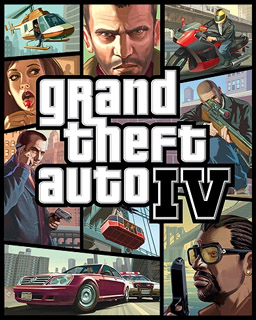
100 Reviews for 100 Games #4: GTA IV


                Grand Theft Auto IV starts what seems to be a maturing in the franchise and as a result has experienced some growing pains that are present in the design. The game removes the previous character stat building mechanic from the previous installment and instead focuses on the core gameplay of completing story based missions in a sandbox environment. The notable thing here is that the sandbox environment has been filled with many subtle design choices that add some texture to the gameplay even though they don’t really contribute to the core interaction loop.

                Story is a big part of the gameplay as it contextualizes the sandbox world as well as acts as the key that opens up new areas in the environment. Without delving too much into the story it attempts a much more serious tone than its previous installments and adds some choice in which the player can affect the story, however, the impact of these choices is minimal to the overarching story there’s really only one important choice that affects the outcome of the story. While these choices feel somewhat irrelevant in the grand scheme of things the game at least tries to make the method of inputting your choice somewhat interesting. The game doesn’t fall back on having the player simply pick from choice of outcomes in a choice bubble fashion, but instead lets the player act out their choice using gameplay during key moments of the story. Some examples involve choosing whether or not to kill a certain character, deciding whether or not to take an item, or deciding which character to betray. This method feels a little more personal and the game could’ve used this more often to better emphasize the indecisive nature of the main character as well as play off the fact that character constantly complains about being used like a puppet. Another interesting narrative mechanic would’ve been to allow the unpredicted nature of this method of choice push the story in a more modular direction. However much of these choices are very black and white and in the end don’t amount to much.

                When the playing the game like an actual sandbox things get much more interesting. The world of Grand Theft Auto is very interesting and the designers have made sure that world feels vibrant and alive with interesting A.I. and an abundance of visual and audio content such as television channels and radio channels that help build and contextualize Liberty City. Many of the things you can do in this game just help establish immersion whether it’s playing simple mini games, watching scripted NPCs perform comedy and magic, walking around drunk, or even just eating a hotdog. The only problem the physics can get in the way of the game sometimes, whether the cars control like they’re on ice, or the motorcycles which are just a pain to operate. Sometimes the game tries too hard to be realistic and adds some bizarre elements that just make the player feel fragile such as taking damage, and even being able to become incapacitated, from falling. And, other times the player may end up flying out of a vehicle from a head on collision and bounce around walls only to have the character stand up and brush it off which makes the game feel like slapstick comedy

                The multiplayer is enjoyable when combining standard multiplayer game archetypes and the creative freedom of the sandbox environment. The best part about multiplayer is when the game becomes hectic as players start stacking cars to form barricades, or when they use the urban environment to their advantage to flank opposing players. The game stands stronger when the game encourages players to think of creative solutions using all the different components in Liberty City.

Thursday, October 11, 2012

100 Reviews for 100 Games #3 Super Mario Galaxy


               Super Mario Galaxy is the culmination of years of tweaking the platform precision mechanics of the Mario franchise and an attempt to address the criticisms of the previous core series installment Super Mario Galaxy. All of the features in this game have been whittled down to the core in an attempt to go back to the series roots when it first hit the 3rd back in Super Mario 64. The game forgoes any complex narrative that could take away from its pure gameplay structure and makes sure that the gameplay is the strongest thing about Mario Galaxy.

                The most important thing in any Mario game is being able to control the main character with a level of confidence that feels second nature in order to steadily introduce new concepts and obstacles to traverse. The game manages to replicate a feeling of satisfaction by just having the character run and jump around, probably the best thing about this and the perhaps the Mario franchise in general is how versatile the character is. The game’s biggest feature, intergalactic platforming, is handled exceptionally well thanks to the controls as well as the dynamic camera. Running around on a spherical object and jumping from one space to another feels incredibly intuitive. After a while it becomes second nature and you begin to forget how much thinking you actually do in this game in regards gravitational pull and Mario’s new sense of momentum which are new concepts in a Mario game. The camera also helps by orienting itself relative to Mario in a way that doesn’t confuse or nauseate the player. It would’ve been nice if the game had gone deeper exploiting intergalactic planet to planet platforming. Instead there are some levels that are more traditionally laid out like one huge plot of land with pitfalls that lead to black holes.

                The game also does a really good job at packing a lot of gameplay and conserving actual content. The game stays true to the classic 3D Mario formula with its hubworld and mission based stages. The missions are designed in a way in that, even if you are revisiting the same level 7 times it never drags or feels repetitive thanks rearranged level elements and missions that force you to think about the same level in a different way. The game also never forces you to play the levels fully, instead allowing a steady progression in difficulty with the introduction of new levels after a certain threshold has been met and slowly gravitating towards a more open level selection as you progress through the game. The only real drag on this game is the boss battles with Bowser. While other stages and bosses try to be creative, the fights with Bowser just come off as repetitive. Whether it’s trying to keep up a tradition that harkens back to the original Super Mario Bros, or maybe just not being able to make creative fights with Bowser, these fights are the glum in an otherwise bright game.

                The extras in this game are another enjoyable part of the experience such as Prankster Comets which add a level of challenge for the more veteran Mario players as well as the inclusion of Luigi as a playable character after beating the game adding a subtle increase in difficulty. Luigi’s difference in momentum and friction makes the controls feel fundamentally different in a way that changes how you play the game. The only real downer is the multiplayer which admittedly feels a little tacked, as what could’ve been a fun co-op experience with a friend with each controlling one of the Mario Brothers, only amounts to the second player moving a cursor around the screen helping the first player get items and stun enemies. However Super Mario Galaxy still does a lot of things right which makes this one of the most enjoyable experiences in a long time.

Monday, October 1, 2012

100 Reviews for 100 Games: #2 Soul Calibur


Soul Calibur is a very easy fighting game to pick up and enjoy through its simple controls and easy to grasp mechanics. Upon turning on the game the player is immediately introduced to the roster of main characters. Each character has a distinctive feel and play style inviting all kinds of play styles and entices players to learn new characters as they provide very different play experiences adding a welcome element of discovery to the fighting game genre.

The combat feels very heavy and powerful as each attack has immense aesthetic feedback, characters swing their weapons and bodies with all their might creating a very satisfying feeling of power and fidelity. The gameplay is very to pick as it allows players with very little knowledge of the game to start creating a flurry of combos and devasting attacks that chomp away chunks of their opponents lives as green pieces from the the health bar fly off the screen. As you may pick up on this game is very big on feedback that directly leads to player empowerment. Some characters yell and lunge their weapons forward while heavy characters stomp around the arena and heavy attacks make characters writhe in pain and fall to the ground. All of this is more than just audio and visual eye candy as these cues are all part of the secondary feedback that telegraph to the player the state of the game with great effect.

The game is balanced in a peculiar way as in rather than giving each character an balanced and equal feel, instead each character feels overpowered in one aspect creating a sense of controlled chaos. Whether its Voldo's slippery control style with unorthodox stances to Astaroth's giant weapon that seems to clear the screen with every swipe. This all correlates a common theme which is empowerment, the genius is that at the end of the day every character feels satisfying to control, gives the player a feeling that they have the upper hand, and is still statistically balanced. While each character may seem to fight very differently all of their attacks and moves still adhere to a set of guidelines and attack rules. There are only 3 main attack types, horizontal, vertical, and kicks as well as a slew of technical moves which include jumping, grabbing, and guarding. Guarding is activated via a button press instead of moving away from the player and hops and crouching allow for more advanced dodging maneuvers along with impact guard which allows for offensive blocking. Since the fighters can move in all 3 dimensions the game takes advantage of this by having attacks and grabs change depending which direction characters are attacked from.

Since this is a console port of a fighting game, the designers felt the need to pad out the fighting experience with extra modes, which really just amount to drawn out explanations for characters to pummel each other with various conditions. With the mission mode allowing players to build up techniques by having to perform various conditions besides just defeating your opponent as quickly and violently as possible. The core experience never gets muddled, however, the game is first and foremost about fighting and delivers its unique experience allowing players to enjoy it in its purest form with a combat system that is incredibly satisfying and easy to play.